SCandinavian Cruises - 2026
Tuesday 5 May'26 - Oxford & Cotswolds
A 0630 start to get to the tour meeting point at Gloucester St Station for a 0730 departure. Just on 2 hours later, after leaving the hustle and bustle of London and moving through the very green Cotswold fields, we stopped in the town of Burford. Now before I mention anymore about this quaint town, I feel I should explain the origins of the name, Cotswold. It is derived from old english from Cots (the sheep fields) and Wolds (the rolling hills).
Burford has, as recent discoveries have found has been a settlement for a very long time, but became a market town officially in the early 16th century. Its real claim to fame is that it was where Oliver Cromwell planned and executed his coup, albeit, that only lasted some 11 years. His downfall was to ban Xmas which upset the great unwashed no end (how dare he!!!)...


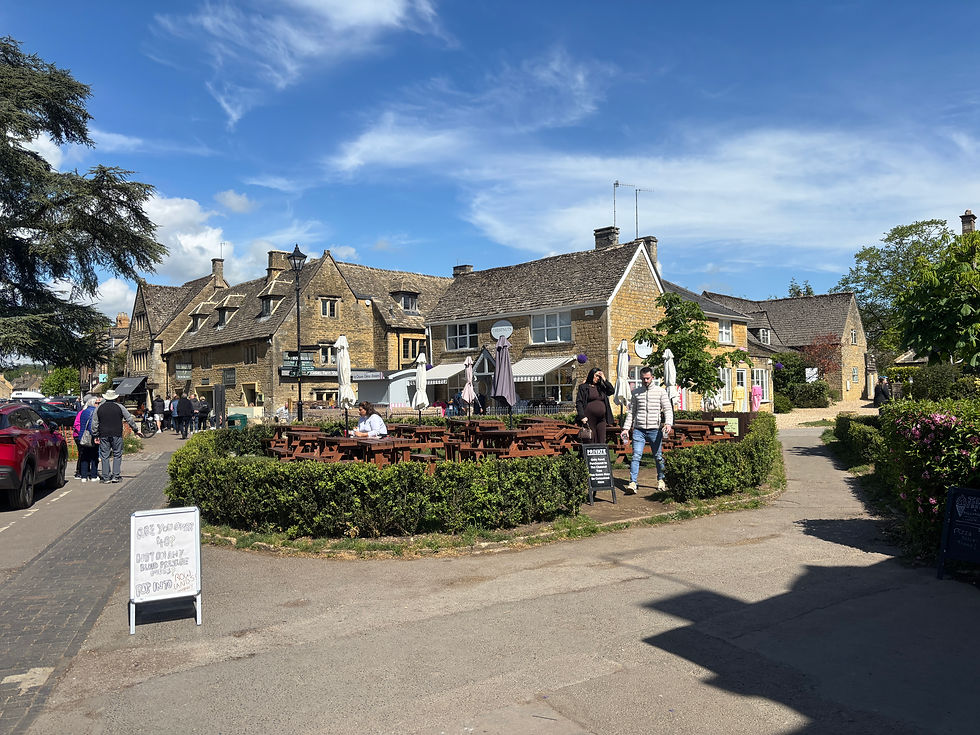
The next stop was Bourton on the Water, or as it is known locally, "Venice of the Cotswolds". This is because it has a river, albeit no more than 1-2 feet deep at best, that runs through the town centre and it has 7 little stone bridges that cross it in the space of a mile. Regardless, very picturesque...




Next, and final stop, was Oxford. The city was created some 900 years ago by the then King of England, who just happened to also be the King of France at the time. He was a little tired with the fact that Englishmen had to go to France for a University education. So he spoke with his most learned advisors and they suggested that he create his own university. The rest is now history.
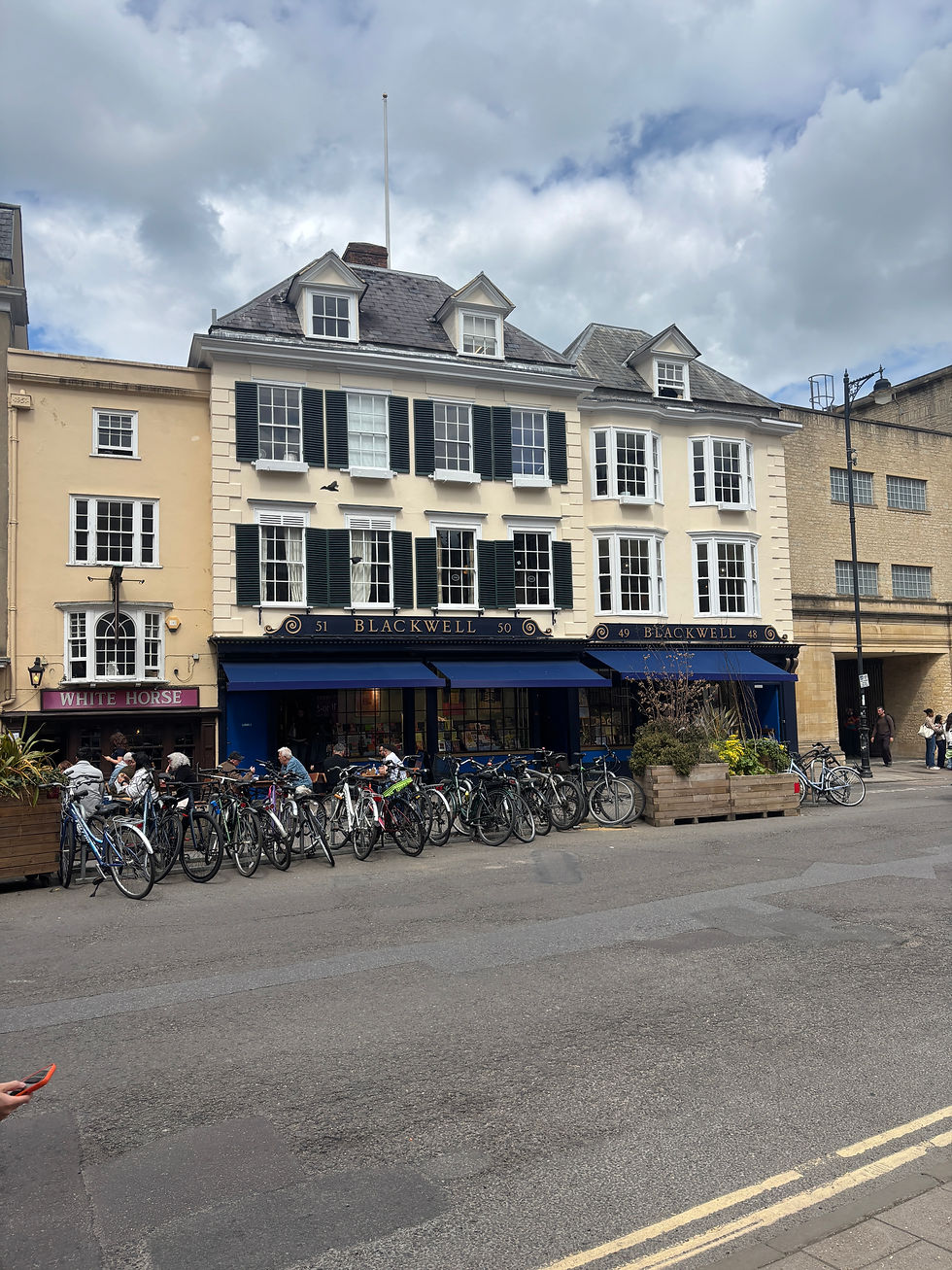
We went on a guided walking tour of the more memorable bits of the University, which is not on a single campus, but spread across the city. The most notable buildings, in my opinion where Blackwells Bookshop. This place is where all the students get all their textbooks from. Looks can be deceiving as the building not only goes back a long way, it also has 3 floors below ground. Next was the Bordelian Library which houses every single book that has ever been published in England. It also has 7 floors below ground. I was surprised to find out that you are not allowed to borrow the books even though it is a library. You are allowed to study them on the premises and that rule applies to all. Even Prince Charles (as he was known at the time) was not allowed to remove a book he wanted to research!
An interesting thing was the College of St John's. In the photo that shows the Study Building on the left (which also had a few bars within it in years gone by) and the Dormitory on the right, you might notice a structure that looks very much like the "Bridge of Sighs" in Venice. Well, originally, that wasn't there and was added in the 18th century because far too many students "studied very hard" in the bars and when they stumbled to bed in the early hours, the local constabulary would arrest and fine them due to a 9pm curfew. This resulted in a dramatic lessening of numbers within the college and as the financial health of all the colleges within the university is dependent upon the time honoured tradition of alumni making a yearly donation to their respective colleges, the college management decided to remove the issue by providing an alternate way between study and bed...
Last but by no means least is the Ratcliffe Camera Library, however, it is not a library dedicated to photography as you may think, rather, at the time it was built, it was built in the Italian camera style as it was then know.




We were dropped off in London around 1750 and decided to eat at a Singaporean food joint before catching the Tube back to our digs.